Public health isn't decided in a hospital. It's decided at the shelf, on the label, in the ordinary daily choice nobody was ever taught to examine.
#BaDekhRahiHai operates in the two seconds before someone reaches for something without looking at it. Scroll on.
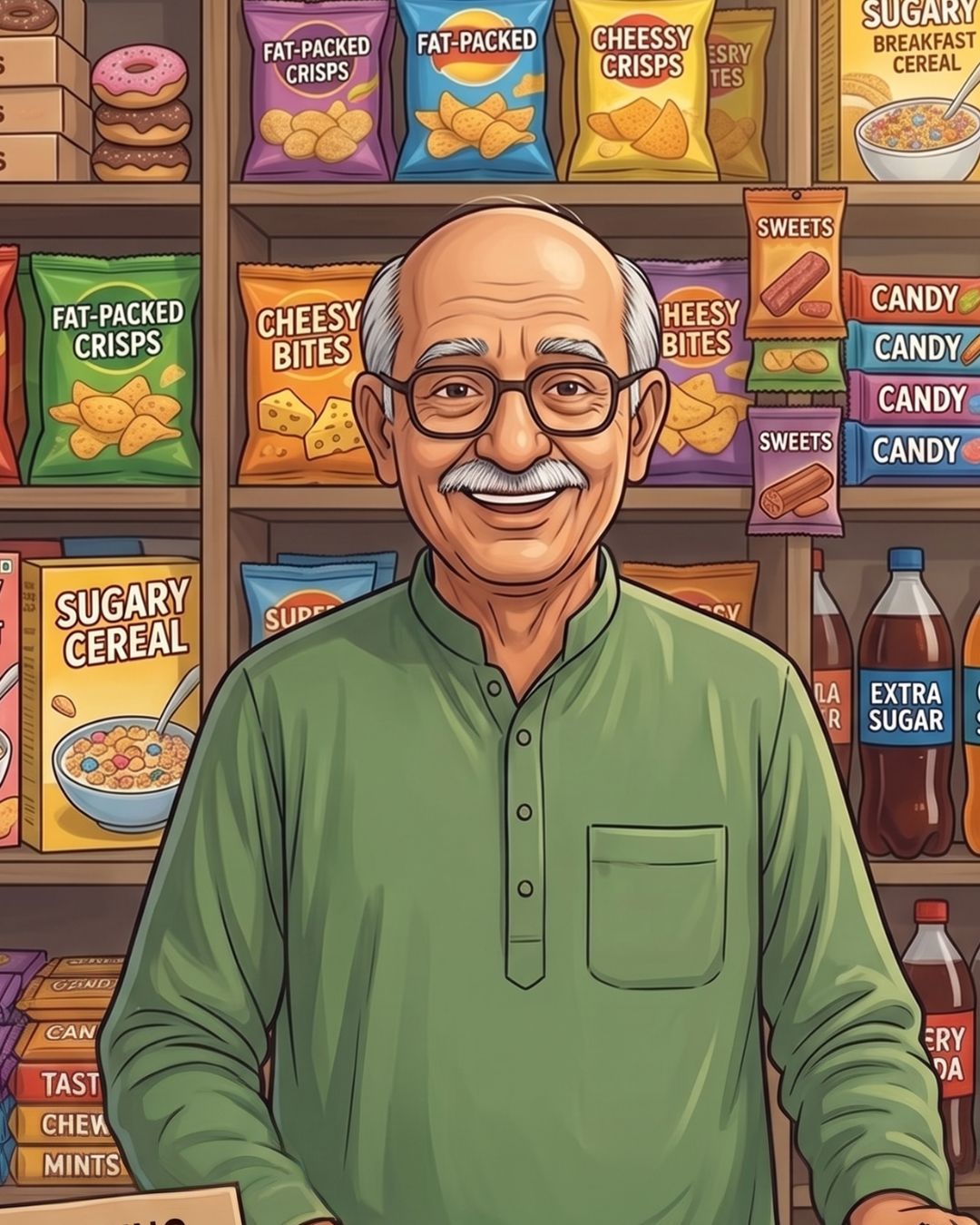
The shopkeeper everyone trusts by default.
He's sold the same packets to three generations of the same families. He is sincere, warm and completely trusted. He isn't the villain, he's the audience. He's what any of us becomes when a thing is normal for long enough. The adversary here isn't a person. It's the unexamined default.
"Arre, yeh toh sab khate hain. Isse kya hi hoga."
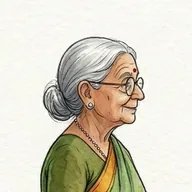
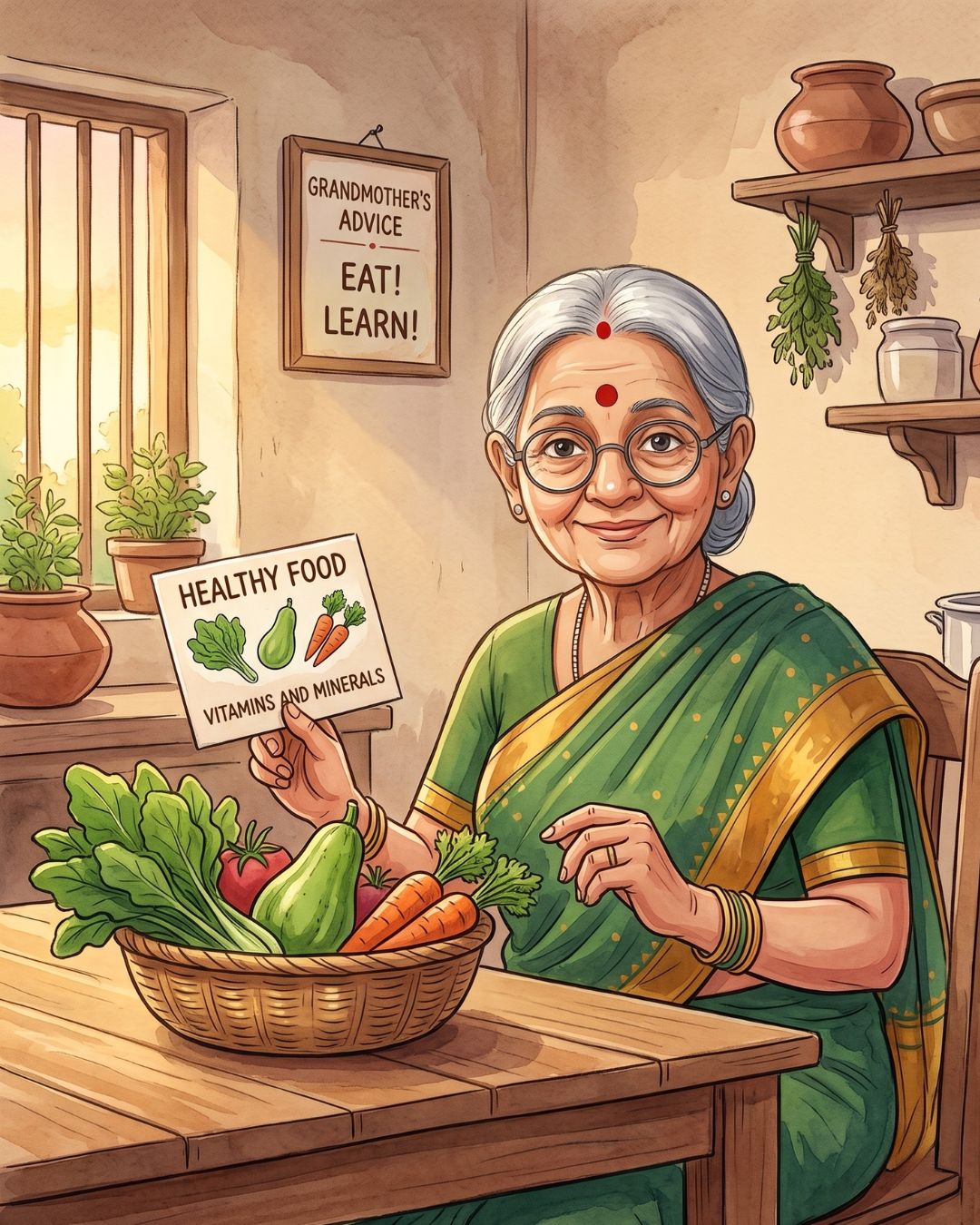
The grandmother who never outsourced her judgment.
Ba isn't an expert. She's not a nutritionist. She's simply the one person who kept reading the packet, turning it over, asking the plain question. She asks; she never accuses. Her power is patience, not volume, and the evidence has quietly caught up to her.
- "Yeh kya kha rahe ho?"What are you eating?
- "Label padha kya?"Did you read the label?
- "Roz yeh use karte ho?"You use this every day?
The one who's recently curious, like the audience is.
The Student witnesses Ba and Chacha and starts carrying the question into her own world: the school canteen, the group chat, the shop she goes to with friends. She isn't wise yet. That's the point. The elder conversation (Ba ↔ Chacha) rhymes with the peer one (Student ↔ friend who shrugs). Same tension, one generation down, which is how a question travels.
Nobody in this story is lying.
The harm doesn't propagate through deception. It propagates through consensus. When enough people do something for long enough, "normal" quietly takes over the job that "safe" used to do, and checking simply stops. Nobody decided to stop checking. Everyone just… did. That's the gap we work in.
"Arre, sab khate hain. Kuch nahi hota."
"Hota kya hai, pata hai kya?"
One wins by default. The other wins by habit. #BaDekhRahiHai is about making Ba's habit the default.
Ba can't go door to door. A classroom can.
So her questioning instinct got handed to students, the ones who buy from Chacha every afternoon and scroll past the ad every evening. Information travels upward in Indian households: a child who learns something at school brings it to the dinner table. That's the theory of change in one sentence. The child becomes Ba.
Five exposures. Every single day. Not one taught as a decision.
Young Indians are the most marketed-to generation in the country's history, and the least equipped to evaluate what's being marketed to them. The issue isn't that they're making bad choices. It's that they aren't making choices at all, they're inheriting defaults, from advertising, from influencers, from convenience, from the shelf itself.
- Packaged food & drink
Multiple exposures a day. Kids can't read a label, can't tell processed from ultra-processed, don't know marketing claims are largely unregulated.
- Personal-care products
Applied to skin daily, often absorbed. Ingredient lists are functionally unreadable; "dermatologically tested" means almost nothing.
- Clothing & fabric
Against the skin 16+ hours a day, and almost never conceived of as a health exposure at all.
- Habits, sleep, screen, movement, stress
Continuous and so normalised they're invisible. Screen saturation is the water they swim in.
- Air, water, plastic, chemicals
Treated as the government's problem, experienced as a personal one, every breath, every sip.
- Not one of these is taught as a decision
Young Indians are the most marketed-to generation in the country's history, and the least equipped to evaluate what's being marketed to them.
A generation for whom reading a label is as unremarkable as reading a road sign.
Preventive awareness isn't a niche interest or a wellness aesthetic, it's basic literacy, sitting alongside reading and arithmetic as something an educated person simply has. In that world, the name of this movement becomes redundant: nobody needs reminding that Ba is watching, because they've become Ba.
- 1 CrStudents who can read a label by 2030
- 5Pillars of everyday health literacy
- 3+Languages: English, Hindi, regional
- 0Adults holding the mic